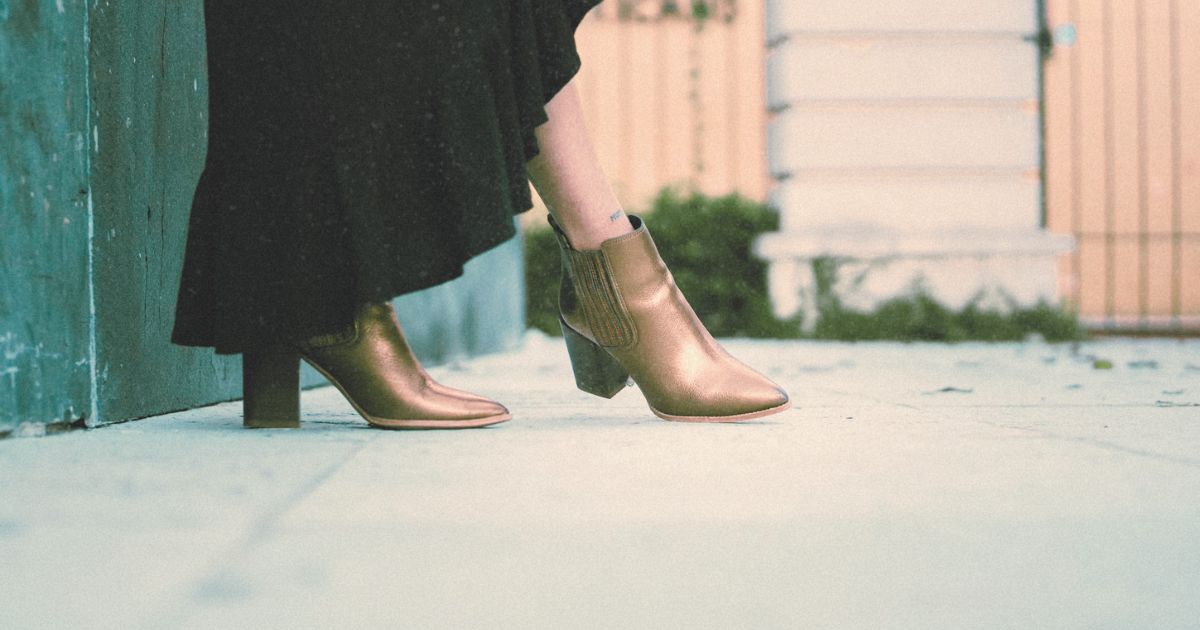
If the words “comfortable heels” feel like a contradiction to you, you’re not alone. Somewhere between the office dress code and the wedding invite, most of us end up needing a pair of heels we can actually survive in — and “survive” is doing a lot of work in that sentence.
The good news: some heel styles are genuinely built to be more forgiving than others, and there are a few technical things you can check before you buy that matter more than the brand name on the box. We dug through real conversations from people who’ve been exactly where you are — new to heels, over heels, or just done hobbling home — to pull together what actually helps.
Heels for Beginners: The 5 Most Comfortable Types to Start With
1. Block Heel
This is the safest place to start. A wide, chunky base spreads your body weight across a bigger surface area instead of concentrating it on one thin point, which is a huge part of what makes stilettos so punishing. Block heels give you the height and the silhouette without asking your ankles to work overtime to stay balanced.
2. Platform
Platforms are a bit of an optical illusion — and a genuinely clever one. Because there’s a raised sole under the front of your foot as well as the back, the slope between your heel and toe ends up much smaller than the actual heel height suggests. A 3-inch platform heel can feel closer to walking in a 1-inch heel, which makes it one of the most underrated options for anyone easing into heels for the first time.
3. Wedge
Wedges take the “distribute the weight” logic even further by turning the entire sole into one continuous surface. That makes them one of the easiest heel styles to walk in for long stretches, especially outdoors or on uneven ground where a thin heel would sink or wobble.
4. Kitten Heel
Short, often slim, but still unmistakably a heel. Kitten heels give you the visual lift and polish without much of the balance challenge, since there’s simply less height to manage. If your goal is “look put-together, feel like myself,” this is often the sweet spot.
5. Dance Heels for Beginners
This one’s a bit of an insider tip: heels designed for salsa, ballroom, or swing dancing are built for people who need to move — sometimes for hours — without their feet giving out. They tend to have reinforced heels and extra cushioning under the ball of the foot, which is usually where heel pain hits hardest. The catch is that many dance heels have suede or fabric soles meant for indoor floors, not pavement, so they may need to be resoled with rubber if you want to wear them out and about.
What Actually Makes the Best Heels for Comfort
Two pairs can have the exact same heel height and shape and feel completely different on your feet. Here’s what tends to make the real difference:
The flex test. Before buying, hold the front of the shoe in one hand and the heel in the other, and gently try to bend them apart. If there’s noticeable flex or give between the heel and the rest of the shoe, that’s a sign of weaker construction — it can make the shoe feel unstable with every step, even if the heel itself looks sturdy.
Arch support match. Stand in the shoe and check for a gap between the bottom of your foot and the footbed. A gap usually means the arch of the shoe doesn’t match the arch of your foot — and that mismatch matters more than most people expect, even when the length and width are technically correct.
Sizing up. It’s common for feet to swell slightly inside a heel over the course of a day, and heels also shift your foot forward in a way flats don’t. Going up half a size (sometimes a full size) from your usual is a frequently mentioned fix, especially for anything with a pointed or narrow toe box.
Gel inserts over foam. For pain concentrated at the ball of the foot — one of the most common heel complaints — gel inserts tend to hold their cushioning better under repeated pressure than foam does.
How to Walk in Heels for Beginners (Without the Suffering)
- Walk heel-to-toe, deliberately. Putting your heel down first, then rolling through to your toe, shifts pressure away from the front of your foot. It’s not the way most of us walk naturally in flats, so it takes a little practice.
- Start low, build up. Lower heels make it much easier to practice that heel-toe motion before you try it in something taller or thinner.
- Bring backup shoes. Wearing sneakers or flats for the commute and changing into your heels once you arrive is a small habit that saves a lot of wear and tear — on your feet and on the shoes.
Do You Even Need to Wear Heels?
Worth saying plainly: heels aren’t a requirement for looking polished anymore. A sharp pair of loafers, oxfords, or dressy flats can carry a professional or elevated look just as well, and for a lot of people that’s simply the better trade-off. If you’re someone with wider or longer toes, weaker ankles, or a foot shape that just doesn’t get along with an elevated heel, there’s no rule that says you have to push through it. The styles above are for when you want the heel — not a requirement to earn one.
FAQ
Which heels are best for beginners?
Block heels, platforms, and wedges are the easiest starting points because they distribute weight across a wider base instead of concentrating it on one thin point. Kitten heels are also a solid choice if you want the shortest possible learning curve.
How do you walk in heels for beginners without it hurting?
Step heel-first, then roll through to your toe, rather than putting your whole foot down at once. Practicing this in a low, wide heel before moving up to anything taller or thinner makes the motion feel far more natural.
What’s the right posture for walking in heels as a beginner?
Keep your core slightly engaged and your shoulders stacked over your hips rather than leaning forward — leaning forward is what pushes extra weight onto the ball of your foot, which is usually where heel pain starts.
Are platform heels more comfortable than regular heels?
Generally, yes. The raised front sole reduces the angle between your heel and the ball of your foot, so the shoe feels lower and less strenuous than its actual height would suggest.
What heel height is best for someone who’s never worn heels?
Somewhere in the 1 to 2 inch range is the easiest starting point. It’s enough to feel the difference without demanding the balance and ankle strength that taller heels require.
Do heels get more comfortable the more you wear them?
To some extent. Building strength in your ankles, calves, and core makes a real difference over time, and your feet also adjust to the specific shape of shoes you wear regularly. That said, a heel that’s genuinely a poor match for your foot shape or arch usually won’t become comfortable no matter how often you wear it.
Should I size up when buying heels?
Often, yes — many people find they need a half to full size larger in heels than in flats, since the foot shifts forward and can swell throughout the day.
Can insoles actually fix uncomfortable heels?
They can help, especially for pressure at the ball of the foot, but they won’t fix a fundamental mismatch between your foot’s arch and the shoe’s arch. If there’s a visible gap between your foot and the footbed when standing, that’s a sign the shoe itself may not be the right fit, insoles or not.
Is it normal for heels to hurt at first even if they fit?
Some initial adjustment is normal, especially with heel-toe walking being a learned motion. But pain that gets worse rather than better over a few wears, or pain concentrated at one specific point, is usually a signal to size up, try inserts, or reconsider the style.